If you’ve been running Meta ads since 2021, you’ve felt the squeeze. Apple’s App Tracking Transparency didn’t just cost a few percent of signal — for a lot of the accounts I was working on, it felt like someone quietly unplugged half the dashboard. Pixel events started lagging. Attribution windows shrank. “Purchase” events dropped off entirely for users who opted out of tracking.
I’ve deployed server-side tracking infrastructure across 30+ client websites — React apps, PHP sites, WordPress installs, Shopify stores — and this post is the playbook I wish I had the first time I was handed a broken Pixel and told to “just fix it.”
Why pixel-only tracking stopped working
The classic setup is simple: drop the Meta Pixel on your site, fire events from the browser, Meta ingests them through the user’s ad ID. Post-iOS 14, three things broke that chain:
- ATT opt-outs — many iOS users simply deny tracking, so Meta never sees the ad ID.
- Third-party cookie decay — browsers (and ad blockers) are increasingly hostile to cross-domain cookies.
- Network-level signal loss — VPNs, privacy extensions, and private relay strip or scramble requests before they ever reach Meta’s servers.
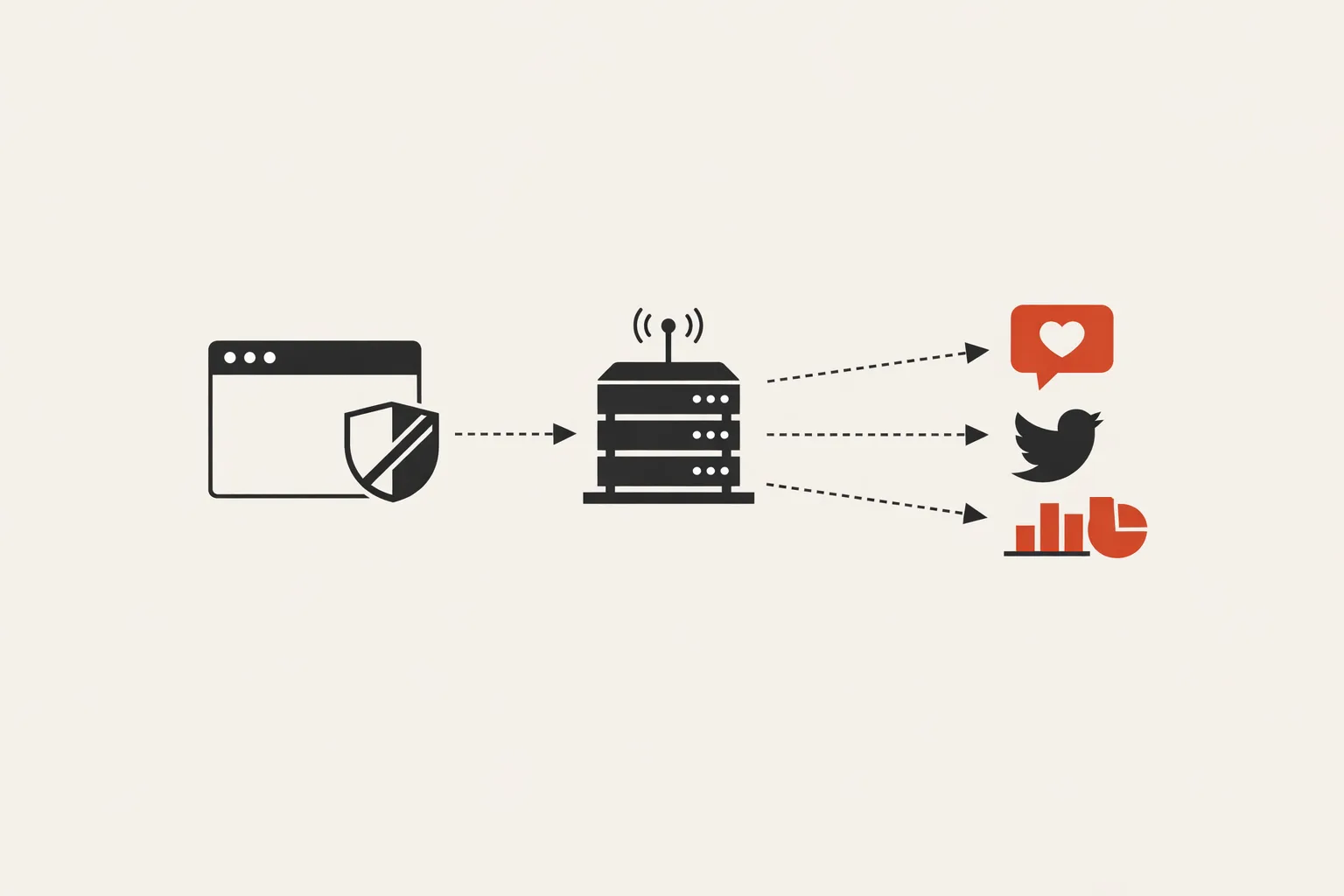
The fix isn’t to track users harder. It’s to move event collection server-side, so the signal that matters (a conversion, a lead, a purchase) is sent from infrastructure you control directly to Meta’s Conversion API — bypassing the browser entirely.
The architecture I deploy
Every deployment I do follows the same shape:
- Web GTM container fires client-side events as usual (pageviews, clicks, form interactions).
- Events are forwarded to a Server GTM container — running on a subdomain like
sgtm.clientdomain.com, usually on Cloud Run or App Engine. - The server container enriches events with first-party data (hashed email, phone, user agent, IP) and fans them out to Meta’s Conversion API, GA4, TikTok, and whatever other platforms the client cares about.
- Event IDs are shared between the browser pixel and the server event so Meta can deduplicate — you never want to double-count a conversion.
The payoff: you recover signal that was previously invisible, and your attribution starts looking a lot more like reality.
Lessons I learned the hard way
- Match quality is everything. Sending a conversion event without hashed customer data is basically useless — Meta can’t attribute it back to a user. I hash email, phone, first name, last name, city, zip, country, and external ID on every event. Match quality jumps from “poor” to “great” on the Meta Events Manager diagnostic and attribution improves visibly within days.
- Deduplication or chaos. If you fire both a browser pixel event and a server event for the same conversion without a shared
event_id, Meta will count it twice and your ROAS will look magical right up until your weekly audit blows up. Always pass a consistent event_id. - Test mode is your friend. Every new deployment goes through Meta’s Test Events tool before it ever sees production traffic. I’ve caught misfires, missing parameters, and bad timestamp formats that would have quietly rotted a client account for weeks.
- GDPR/consent first. Server-side tracking is not a loophole around consent. If a user rejects cookies, the server container respects that too. Anything else is a compliance time bomb.
What actually changed for my clients
On the B2B accounts I manage, rebuilding the event pipeline with server-side GTM + CAPI typically:
- Recovered 20–40% of “lost” conversions on the Meta side within the first 7 days.
- Dramatically improved the stability of cost-per-lead week-over-week, because the algorithm finally had enough signal to optimize cleanly.
- Let me run value-based lookalikes again, which had effectively been broken under pixel-only tracking.
Attribution isn’t sexy. Nobody high-fives you in Slack for a clean dedupe table. But if you’re spending real money on Meta and flying on pixel-only tracking in 2026, you’re flying blind — and the platform is quietly charging you for the privilege.
Fix the plumbing first. Every other optimization depends on it.