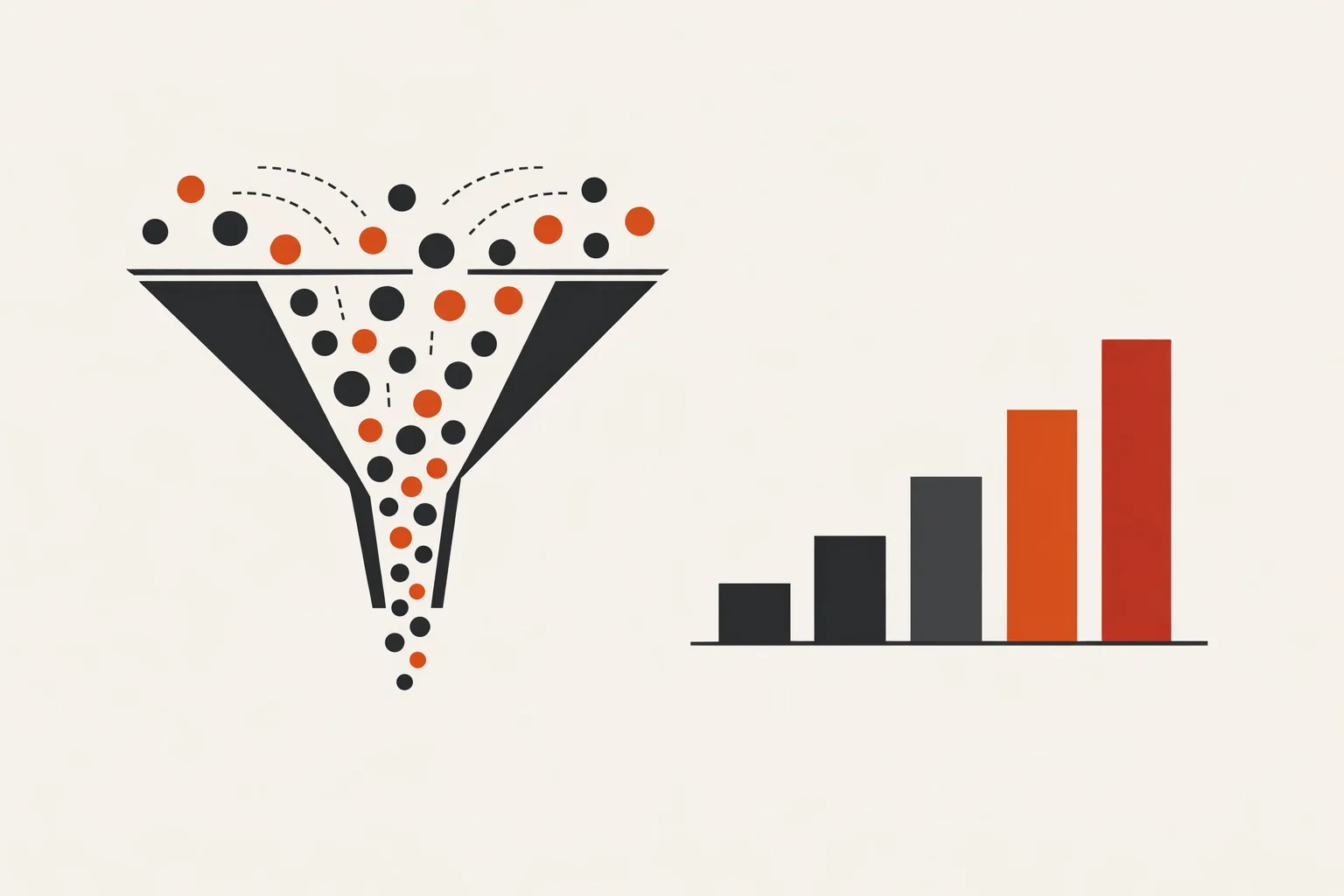
When the brief came in, the target was ambitious but not unreasonable: scale B2B leads across Bangladesh and the UAE for a global marketplace. What we actually ended up delivering surprised everyone — 16,529+ qualified leads in a single quarter and 1,310% quarter-over-quarter lead growth. Here’s the architecture behind that number, stripped of hype.
1. Stop chasing “B2B audiences.” Build intent layers instead.
The trap most advertisers fall into on B2B is thinking the audience is the lever. It’s not. Meta’s job titles are noisy and LinkedIn’s audience sizes shrink fast when you stack filters. What actually moved the needle was layering intent signals on top of loose job-title targeting, not stacking titles on titles.
On Meta, that meant:
- Interests around trade, import/export, wholesale, sourcing
- Engagement retargeting against previous ad clickers and video viewers
- Lookalikes built from high-value converters, not just any lead
On LinkedIn, the sharpest performance came from:
- Job function + seniority rather than exact titles
- Narrowing by industry to filter out tire-kickers
- A matched audience of past CRM leads for retargeting and lookalikes
2. The lead form is the campaign
I can’t stress this enough. On Meta especially, the difference between a $4 CPL and a $40 CPL is almost never the targeting — it’s the lead form. A few things I do every time:
- Two to four questions max on the first pass. Any more and mobile completion craters.
- Use multiple-choice over free-text wherever possible. Free text is where bots and accidental clicks live.
- Add one qualifying question (company size, monthly order volume, industry) so the sales team doesn’t waste cycles on unqualified leads.
- Custom thank-you screens that set expectations: “A representative will contact you in 24 hours” reduces ghosting.
3. Creative, not targeting, is the scaling lever
Once targeting and forms are dialed in, creative is what lets you spend more without CPL blowing up. I ran on a simple cadence:
- 3 creative variants per week minimum — always test against last week’s winner
- Ads focused on a single, concrete benefit (“find verified suppliers in 48 hours”) rather than generic marketplace copy
- Short video (under 15s) outperformed static carousels every time, in every market
- UGC-style creative where possible — face + voice beats polished brand shots for B2B lead gen
4. Tracking the right metric at every stage
A lead count is a vanity metric if you don’t tie it to downstream revenue. Through the campaign I tracked a full waterfall:
- Impression → click (CTR, CPC)
- Click → lead (CPL, CVR)
- Lead → sales-qualified lead (MQL-to-SQL rate)
- SQL → closed-won (conversion and average order value)
The reason that matters: I caught a creative that was producing a great CPL but terrible SQL quality two weeks in, and killed it before it dragged down the whole account. Without the downstream visibility, I’d have scaled the wrong thing.
5. What the 1,310% growth actually required
A few honest notes in case you’re reading this and trying to replicate the result:
- Budget flexibility. The account could reallocate spend weekly based on what was working. Rigid monthly budgets make this style of scaling very hard.
- Fast creative pipeline. I was briefing 3–5 new creatives every week. If your creative pipeline is two weeks long, you’re already behind.
- Clean attribution. All of this was sitting on top of GTM server-side + CAPI — because without that, I’d have been optimizing on half-broken signal.
- Sales team alignment. The lead quality feedback loop between ads and sales was closed within 48 hours, every week. That’s the only way you can trust your CPL numbers.
Scaling B2B lead gen isn’t a secret audience or a magic bid cap. It’s a tight loop: test creative fast, listen to sales, protect lead quality at the form, and make sure your attribution isn’t lying to you. Do those four things consistently and “impossible” growth numbers start feeling inevitable.